Patrick Henry Jones by Mark H. Dunkelman
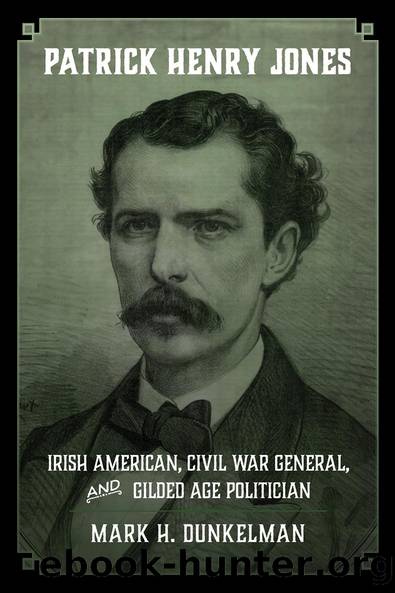
Author:Mark H. Dunkelman [Dunkelman, Mark H.]
Language: eng
Format: epub
Tags: Nonfiction, History, Americas, United States, Civil War Period (1850-1877)
ISBN: 9780807159682
Publisher: LSU Press
Published: 2015-05-18T04:00:00+00:00
Nolan was recalled on July 26. He admitted to the committee that he had been âsomewhat a petulant witness,â but he continued to refuse to answer certain questions. As he and the committeemen engaged in a back-and-forth, he repeatedly denied bribing legislators and declared his lobbying efforts were not unusual. He had heardâfrom Jones, he thoughtâthat another law firm had a similar arrangement with the Steamship Conference. When told that commission records showed that Jones drew a salary as counsel up to January 1, 1871, Nolan expressed surprise and reasserted that Jonesâs official duties had ended in 1869. He continued to insist that because he had done no work for the commission since 1869, he believed Jones had not done any either. Jones would have to explain the discrepancy.35
Dogged questioning dug deeper into the Nolan-Jones relationship. Did Nolan consult with Jones in 1871 regarding passage of the head money reduction bill in the legislature? Nolan thought he might have; it was likely. Was it then that Jones had told him about another law firmâs arrangement with the Steamship Conference? Nolan could not remember; he thought it was Jones who told him about it, to relieve him of worry about his own arrangement. Then the committee struck at the heart of the matter. âDid General Jones and other persons, or General Jones individually, procure for you this employment as counsel for the steamship companies in 1871, and didnât General Jones share with you in the profits of that transaction?â Nolan declined to answer. He admitted that he did not know what had steered the job his wayâhe had had no previous experience as a lobbyist. The committee chairman remarked that Nolanâs hiring by the Steamship Conference, so closely following Jonesâs resignation as counsel, was a remarkable coincidence. Asked again if he had agreed to pay a portion of the head money cash to Jones, Nolan again declined to answer, âwithout making implications at all upon anybody.â His refusal to answer, of course, left the implication wide open.36
Confronted with a receipt for salary received from the commission signed by Jones and dated December 1870, Nolan continued to insistâto the exasperation of the committeemenâthat Jones had resigned as counsel in 1869. Nolan was vague about the law partnership of Palmer, Jones and Nolan. He admitted that Jones merely lent his name to the firm as âa sort of quasi partnerâ out of friendship, âwhich undoubtedly did me some good in acquiring business.â Nolan also refused to say whether he had shared head money profits with George Palmer. Then he changed his tune and said that Jones and Palmer had never received any of the money. Both men were earning a great deal at the time, he observed, Jones as postmaster and Palmer as appraiser. They knew all about his deal with the Steamship Conference and his trip to Albany, but they did not assist or advise him.37
The Herald found the dayâs revelationsâor lack thereofââagain of the most exciting interest.â Nolan was misplaced in
Download
This site does not store any files on its server. We only index and link to content provided by other sites. Please contact the content providers to delete copyright contents if any and email us, we'll remove relevant links or contents immediately.
The Vikings: Conquering England, France, and Ireland by Wernick Robert(84377)
Ali Pasha, Lion of Ioannina by Eugenia Russell & Eugenia Russell(40317)
The Conquerors (The Winning of America Series Book 3) by Eckert Allan W(37982)
The Vikings: Discoverers of a New World by Wernick Robert(37006)
Cecilia; Or, Memoirs of an Heiress — Volume 1 by Fanny Burney(32636)
Cecilia; Or, Memoirs of an Heiress — Volume 2 by Fanny Burney(32010)
Cecilia; Or, Memoirs of an Heiress — Volume 3 by Fanny Burney(31996)
Empire of the Sikhs by Patwant Singh(23135)
The Secret History by Donna Tartt(19293)
Hans Sturm: A Soldier's Odyssey on the Eastern Front by Gordon Williamson(18649)
Cat's cradle by Kurt Vonnegut(15441)
Pimp by Iceberg Slim(14664)
Sapiens: A Brief History of Humankind by Yuval Noah Harari(14458)
Norse Mythology by Gaiman Neil(13457)
Talking to Strangers by Malcolm Gladwell(13439)
Leonardo da Vinci by Walter Isaacson(13411)
4 3 2 1: A Novel by Paul Auster(12509)
Underground: A Human History of the Worlds Beneath Our Feet by Will Hunt(12144)
The Radium Girls by Kate Moore(12090)
